Best Crypto Portfolio Tracker with Advanced Analytics

Crypto portfolio management in 2025 ceases being just one category. There is the group leaning towards bots and lean mobile apps promising fast victories and effortless setup. There is the group using specialized services featuring detailed analytics, hard-laced security procedures, and report-ready exports for compliance. The divide between the two groups continues expanding due to market structure, regulation, as well as the expectation of the users continuing to drive complexity upwards.
Early adopters used to accept solitary-exchange dashboards and hand-calculated spreadsheets. Next was multi-chain action, cross-margin products, yield structured on organized lines, NFTs, and tax periods with thousands of lines. Generic platforms fall behind when portfolios cross multiple chains, some few central hubs, and just as much as one DeFi protocol rewarding compounding on a daily basis. Specialized platforms showed up to bear that burden with richer data models, reproducible computation, and superior audit trails.
“The moment the trade history becomes novel-length chapters – CEX, L2, staking, bridges – generic apps begin to shaky. You need numbers to stand by when some regulator or accountant says something questioning.”
Following sections outline why investors grow beyond bots and basic apps, specialized services provide, as well as where trade-offs occur in everyday use.
Why crypto investors move beyond bots and basic apps
Botz and primitive apps lure newbies with automation on the first day: tie in an API, flip on the strategy, sit back and watch positions unfurl. That ease gets attention, but some areas of pain surface as the portfolio gets seasoned. Users require precision about ROI/PnL accuracy, understanding about fees and slippage, and solid exports for tax preparation. Lean stacks never provide all three simultaneously.
Standard triggers leading users toward exclusive services:
- Unkempt ROI/PnL after bridge funds or reward claims; figures wane off track from actualities.
- Opaque execution in bot strategies; users cannot trace why rebalancing failed or why slippage exploded.
- Omitted coverage for NFTs, liquidty positions, and vested tokens; dashboards display balance but don’t care about mechanics of it.
- Tax season anxiety; CSV exports don’t include normalization so you get mismatched lines and data clean-up runs.
Concise field note from daily use best exemplifies the tipping point:
“A basic app handled my initial 50 spot trade spotlessly. Once I began farming stable pairs and shifting coins between chains, my PnL view was random. I required something that comprehended liquidity tokens as well as reward streams without babysitting.”
To provide some shape, the comparison below quickens the pacing on where exactly each style shines or falls.
Dimension
- Generic bots
Setup effort: Quick connection, templates for strategies
ROI/PnL fidelity: Sometimes superficial; little event modeling
Coverage breadth: Strategy-focused; portfolio perspective subordinate
Explainability: Low; hard to audit logic of strategy
Tax/Compliance support: Uncommon add-on; few jurisdictions
Risk controls: Basic stop/limits; thin scenario tools
TCO: Low fees; covert fee due to error - Simple apps (simplistic dashboards)
Setup effort: Minimal; manuel add wihor assets or using API
ROI/PnL fidelity: Satisfies spot only requirement
Coverage breadth: Primary coins only; incomplete multi-chain coverage
Explainability: Medium; charts without lineage
Tax/Compliance support: Export happens but not normalized
Risk controls: Low; informative notifications
TCO: Low-cost/inexpensive; time expensive as scale increases - Specialized services (pro trackers)
Setup effort: Guider onboarding; richer connectors
ROI/PnL fidelity: Trade-level precision on CEX, DeFi, NFT
Coverage breadth: Multi-chain, LPs, rewards, vesting, NFTs
Explainability: High; drill-downs, calculation lineage, chang
Tax/Compliance support: Normalized outputs, Multi-region tax engines
Risk controls: Position-level risk, drawdown analytics, alerting
TCO: Subscriptions; time gained, less gap in reconciliation
Trends reveal themselves: botting prefers velocity and velocity alone, simple applications prefer openness, specialized platforms prefer accuracy and explainability. As the frequency of trade increases or assets become diverse, the final column becomes the safer refuge.
The imperative for accuracy, regulation, and integrated administration
Advanced portfolios require something beyond price charts and balance circles. Accuracy for the right-of-irony/price-net-loss, alignment for compliance purposes, and the big picture for all assets now constitute success for hardcore users. Dedicated platforms meet those requirements through data models where each event – trade, fee, reward, airdrop, vest- lock – is treated as a first-class citizen.
Accuracy near ROI/PnL
Realistic PnL demands event-level lineage: updates of the cost basis on partials, fee assignment on swaps, realization vs. unrealized segregation, and FX mappings for non-USD pairs. Generic trackers tend to reduce that sophistication, resulting in nice-smoothing graphs that conceal errors. Specialty stacks track lots and bases accurately, so the monthly and yearly numbers reconcile with reality.
Compliance alignment
Regulatory pressure continues to mount. Clean audit trails, immutable logs, and export formats compatible with key tax regimes minimize friction as filings draw near. Teams appreciate predictable schemas, reconciliation reports, and versioned calculators that spit the same number today as six months later.
Holistic management
Portfolios don’t reside any more on one chain or on one venue. It takes an holistic view wallet and CEX data, LP token accounting, valuation mechanisms for NFTs, and even off-chain relics such as staking receipts. Specialized software mashes together all of that surface area without losing context so drill-downs still provide the details of how some headline number got created.
Think about an small example that reflects usual areas of ache:
- A user swaps USDC for ETH on a DEX, supplies ETH/USDC liquidity, earns rewards, later pulls liquidity after volatility spikes, and finally sells rewards on a CEX.
- A simple app displays “portfolio up 7%” without the displaying fees, impermanent loss effect, or gas.
- A specialized service follows each leg, attributes fees, models permanent loss, and adds timestamps for audit purposes.
- In tax filling, the export already includes normalized lines with predictable IDs so an accountant may match rows without detective work.
An actualistic checklist widely adhered to today:
- Data lineage: Is the system capable of justifying any PnL number with references to source events?
- Normalization: do exports unify CEX and DeFi semantics into one schema?
- Reproducibility: Will calculations today reproduce results next quarter after updates of the code?
- Coverage: do the connectors retain LP tokens, claims, vesting, and sales of NFTs?
- Security posture: read-only keys, privileged access, at rest and in-transit encryption, access logging.
“Accuracy trumps attractive. Where numbers correlate bank statements and chain explorers, conviction follows; decisions get better.”
Having established that baseline, the next section will compare the specialized platforms to bots and bare-bones apps vendor by vendor, demonstrating tangible strengths, trade-offs, and use-case alignment – grounded in the organism of ROI/PnL fidelity, security posture, coverage of integrations, and everyday usability.
Key Benefits of Specialized Services
Their beauty lies not in bells and whistles but in how they deal with complexity. Bot programs and lean programs tend to excel at an individual task – making trades, triggering price notifications, or displaying balances. Specialized services, on the other hand, set their sights on providing an integrated whole picture as precise as possible at all times whether you dabble or operate a fund. In this section, their underlying strengths are unraveled where more investors in 2025 turn for them.
Depth of ROI/PnL reporting and analytics
Generic platforms generally quantify performance in a line chart or percentage gain since the beginning. Well sufficient for new players, but as trading strategies branch outward, so much simplification may deceive. Specialized sites dig deeper by providing lot-level basis tracking for costs, actual vs. unrealized breakdowns, as well as delegation of each fee.
A standard specialized service report could as well appear as follows:
- Realized Loss: +$4,320 per ETH swing trades → Clarity on taxable events
- Unrealized Pn: -$1,150 in LP positions → Visibility into ongoing risks
- Fees & Gas Costs: 780 total → Total cost allocation for actual ROI
- ROIS by Strategy: +18% spot, -5% farming → Decision-making between tactics
- Time-Weighted Return (TWR): +11.2% → Normalized performance for deposit/withdrawing
“A generic bot informed me I was up 20%. With fees, gas, and impermanent loss, the actual figure was 6%. The dedicated tracker gave me that wake-up call.”
It takes this level of analytical depth not only to boost confidence – but also allocate better as the way profits truly occur becomes evident.
Security standards compared to bots
Bot applications generally need complete API access, occasionally with trading permission. That presents unnecessary risk when the keys become compromised. Wholesale services advocate for read-only integrations, data encryption, as well as permission scoping. Some also cater for local key storage or self-hosted features for the more private users.
Security layers sometimes include:
- Encryption of sensitive data end-to-end.
- Role-based access for teams.
- Frequent penetration testing and audits.
- SOC2 or ISO27001 certifications for institutional customers.
For investors handling large sums, knowing their API keys cannot be misused is a non-negotiable advantage.
Integration range: multiple exchange, DeFi, NFTs, tax
Where simple apps may settle at an individual exchange connection, expert services interoperate across the whole crypto stack. That encompasses:
- Centralized exchanges (spot, margin, futures).
- Multichain wallets on the chain.
- DeFi protocols: lendings, staking, LP positions, farmings.
- NFT market data feeds.
- In-person connections at tax platforms such as TaxBit or Koinly.
It minimizes fragmentation. Rather than managing numerous trackers individually, all-in-one specialized equipment handles them all. To the end-user, it adds up to fewer blind spots and clearer decisions.
A mini-case illustration:
An average-sized trader operates accounts on Coinbase and Binance, liquid farm on Curve, stores NFTs on OpenSea, as well as vested tokens resulting from a private sale.
- A free app gets only Binance.
- Bot redistributes on Binance/KuCoin but not on DeFi.
- A specialized platform ingests all sources, values NFTs, and exports CSVs ready for tax filings.
Advanced professional usability vs. restricted applications
Institutional traders, funds, and accountants require more than an iPhone app with some pie charts. Advanced services provide audit trials, exportable formats, multi-user functions, and scenario analysis.
Features may include:
- Dashboards for teams assigned to analysts and admins.
- Export to accounting suites (QuickBooks, Xero, SAP).
- Backtesting of strategies on past data.
- Drawdown modeling for drawdowns, leveraging, or hedging strategies.
In comparison, small applications never go beyond single-user consoles. They act as fast visualizers but never become “systems of record.” Experts could never use them for compliance or reporting for investors.
“In reporting back to the limited partners, we could not provide screenshots of the bot. We required exports in structured format so an auditor could authenticate it.”
Specialized services, as a result, succeed not by replacing bots or apps but by scaling with the sophistication of users. Specialized services offer beginner-accessible dashboards at the outset but open up added features when the investor’s requirements evolve.
1. CoinDataFlow
https://coindataflow.com/en/portfolio-tracker
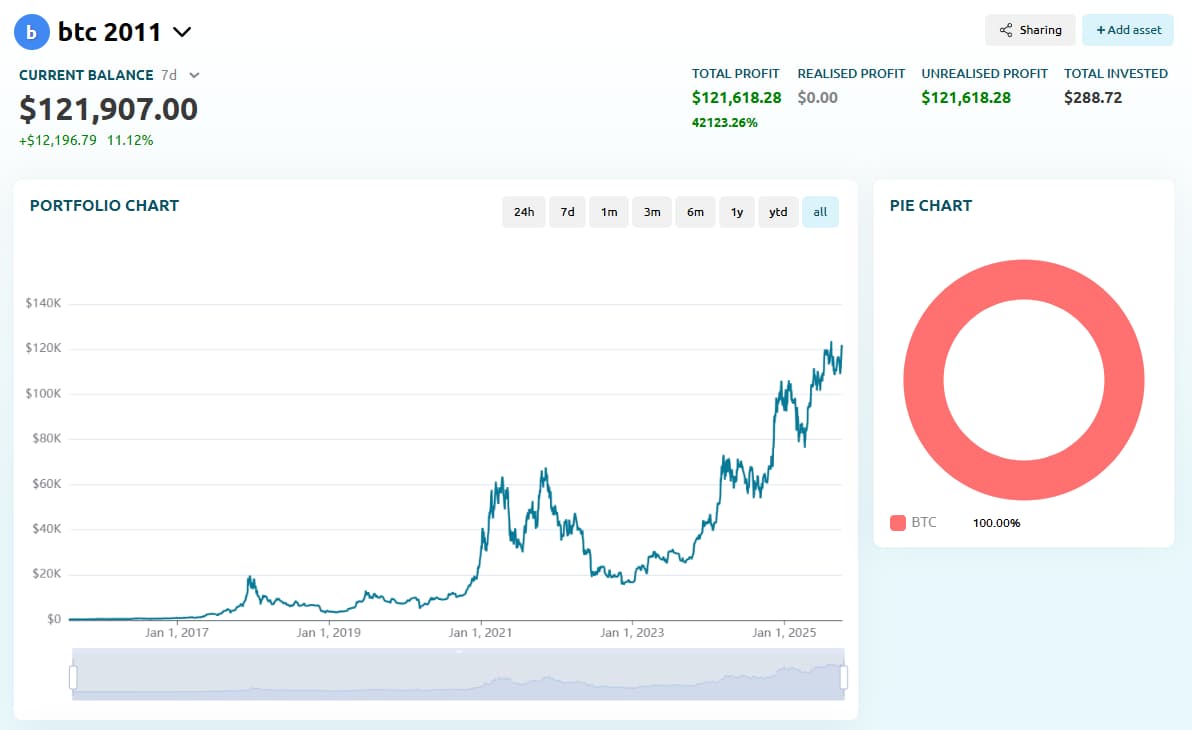
CoinDataFlow demonstrates the ability of the specialized service to integrate the convenience of dashboards with the discipline of automation. While being different from single-batch bots or basic apps, it constructs an aggregator of multi-layers that evolves as the person expands.
Advanced aggregator using portfolio monitoring
CoinDataFlow consolidates exchange balances on headed centers, DeFi positions, NFTs, and even vesting schedules all into a single unified interface. Rather than maintaining different trackers, the users obtain an aggregated overview. For an amateur holder it could be a single pie chart; for an expert, it may consist of an exhaustive ledger record of transactions for several chains.
Case Example:
An individual farming on Curve, holding Ethereum on Coinbase, and holding NFTs on OpenSea sees all positions valued in real time. Costs and gas fees display next to PnL numbers so there’s nothing being stashed in some kind of “miscellaneous” bucket.
Accuracy in ROI/PnL and cross-platform integrations
CoinDataFlow’s best advantage is its-transparent ROI/PnL. While bots abstract balances without reconciling fees, CoinDataFlow attributes each delta to an originating event. Its coverage range is extensive: large-CHEX APIs, on-chain purses, DeFi protocols, and NFT marketplaces.
Feature Comparison:
- ROI/PnL precision: Institutional-level with fee attribution | Generic bots: balance-based only
- Integration breadth: DeFi + vesting + CEX + NFTs | Generic bots: limited to chains or exchanges
- Tax readiness: Exportable, normalized transaction log | Generic bots: CSV dumps needing clean-up
- User adaptability: Beginner dashboard → pro analytics | Generic bots: one-size-fits-all
“It’s the first product where my DeFi income, NFT trading, and CEX positions didn’t feel like different portfolios.” – User comment, 2025
Nuances when compared to niche-specific compliance software
While CoinDataFlow suffices for the majority of investor requirements, it doesn’t dig as far into regulatory expertise as products like TaxBit or Lukka. For businesses requiring GAAP/IFRS-qualified outputs, CoinDataFlow might act as the portfolio frontend but still pass the data on to some compliance-oriented product. For the remaining 90% of retail and semi-professional users, however, the combination of simplicity, accuracy, and breadth makes it preferable to either frill-free apps or single-function bots.
2. MetaTracker
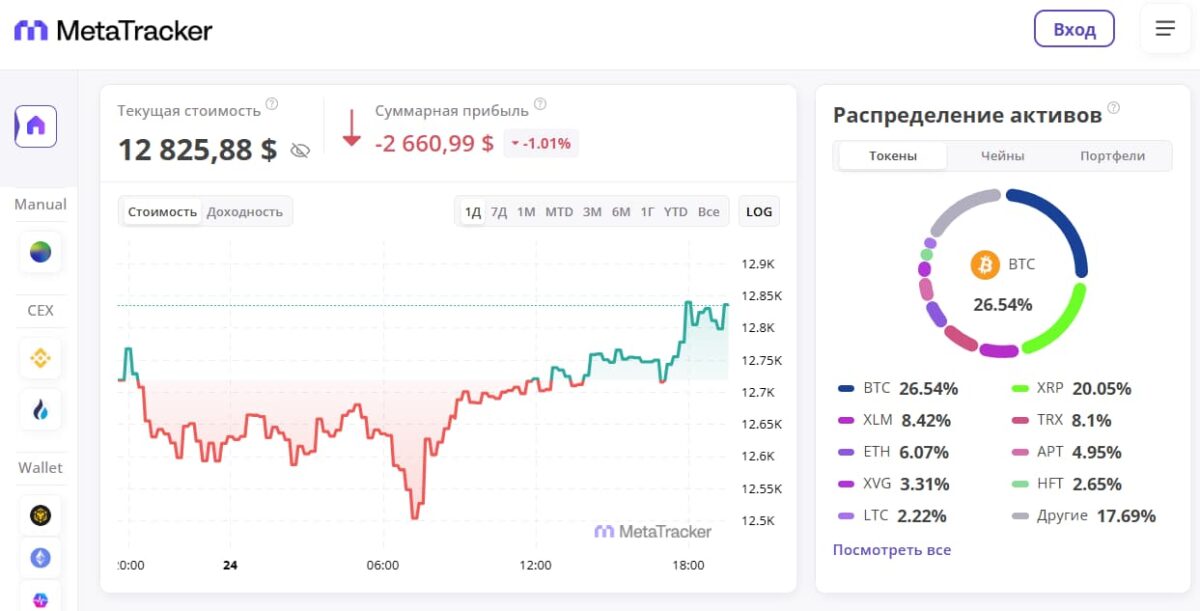
MetaTracker is the flip side of the equation when it comes to specialized aggregators. Created as a simple mobile application, it supports the beginners who only need frequent balance checks as well as basic chart of allocation. It wins on the bases of simplicity and zero configuration but falls behind on the complexity needed for long-term accuracy in the portfolio.
User-friendly mobile application
MetaTracker’s onboarding is simple: download the app, add a wallet or paste addresses in, and you see your holdings in an attractive clean visual presentation. It prioritizes simplicity with:
- Piecharts of asset allocation.
- A time series plot of portfolio value.
- Significant market movements on the go.
- Simple watchlist functionality for tokens.
For the new buyer of Bitcoin or Ethereum, the MetaTracker seems readable. It never buries new users in jargon or tabs.
Feature Comparison
- Asset details: Pie chart + balance → Visual clarity without complexity
- Price notifications: Mobile push alerts → Simple monitoring on the go
- Wallet connection: Direct address input → No API setup required
- Reports: Basic gains chart → Entry-level visibility only
Weaknesses in depth and long-term analytics
The very simplicity for the beginner appealing quickly turns into the bane. It doesn’t have:
- ROIPnL-level trade reconciliation
- DeFi protocol, vesting tokens, or NFT support
- Tax reporting exports
- Multi-exchange API connections
Consequently, MetaTracker serves as a starter but not as an eventual tracker when the portfolio diversifies. People tend to move on after some months upon the realization of unavoidable manual corrections.
“I enjoyed using MetaTracker at the beginning but when I began trading on Binance and staking on Ethereum it was as if I had nowgrown it.” – Retail investor, 2024
Its purpose is thus interim: useful for getting in new users but not for anyone who needs accuracy or compliance. Operational-level services promptly usurp it when users need reliability and reporting sophistication.
3. Shrimpy
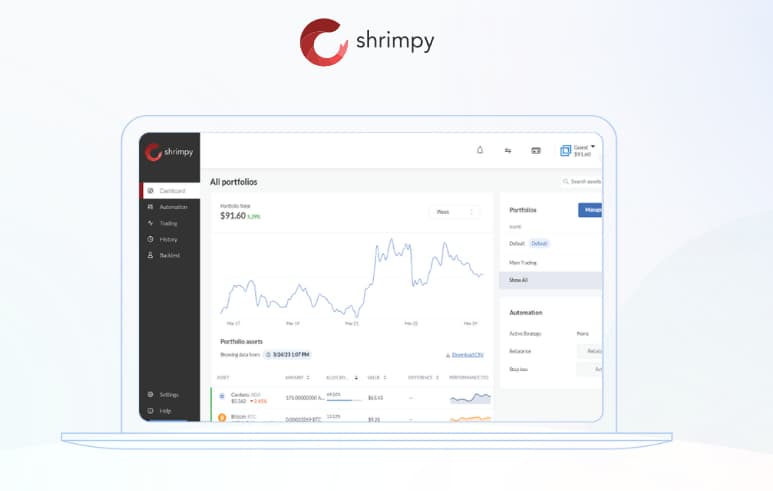
Shrimpy built its reputation on automation through rebalancing bots. Instead of just showing portfolio values, it actively adjusts allocations according to user-defined strategies. This automation appealed to traders who wanted a “set-and-forget” approach. Yet, as with many bot-driven platforms, questions about transparency and risk management have followed.
Bot-controlled portfolio balancing
Its defining characteristic is automated rebalancing. Members set target allocations – 50% BTC, 30% ETH, 20% alt coins – and the bot runs automated trades nonstop to keep them at those ratios.
Benefits include:
- Diminishes emotional trading as it involves going by the book.
- Maintains diversification automatically.
- Provides backtesting functionality for verification of strategy.
- Allows social trading whereby users replicate mainstream allocations.
Sample scenario:
- Portfolio Creation: BTC, ETH, SOL
- Target Allocation: 50/30/20
- Bot rebalancing: Weekly
- Manual trader outcome: Drifted to 65/25/10 → Higher exposure to BTC
- Shrimpy-managed outcome: Stayed near 50/30/20 → Risk remained stable
For buy-and-hold investors, this type of automation comes as similar to hiring an electronic portfolio manager.
Security concerns and reliance on automation
Although it has its merits, Shrimpy presents risk. It involves rebalancing using API keys granted trading access, something riskier than read access. Those keys could end up being misused should they fall into the wrong hands. Expert trackers circumvent the risk by dealing with analysis but not execution.
Other restrictions include:
- Heavily dependent on centralized exchanges; limited DeFi and NFT integration.
- Over-automation – some users want clarity on why trades happen, not just results.
- Subscription fees may become expensive for active traders.
“The bot got it done, but I never got the trade timing. That was not transparent enough for me.” – User comment, 2025
Shrimpy is still valuable for hands-off investors who desire consistent automated rebalancing. But for accuracy-focused investors seeking explainability as well as compliance-ready statements, specialized services stand as the wiser choice.
4. Zapper
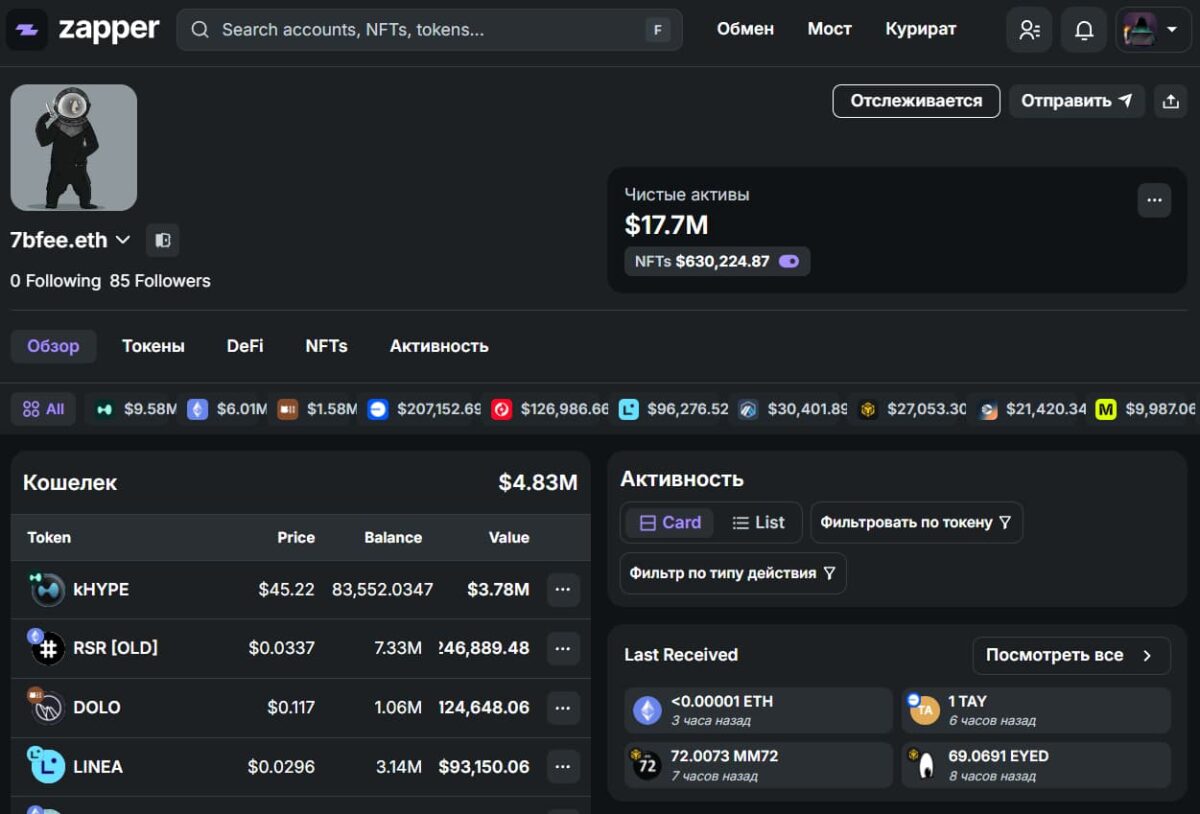
Zapper established itself as a niche product by being a DeFi and NFT portfolio dashboard. Rather than directly competing as a tracker on centralized exchanges, it concentrated on Web3-native assets. Specializing in this way made it highly popular among DeFi enthusiasts but leaves gaps for investors who act in both the on-chain as well as the CEX realm.
Specialized DeFi and NFT reporting
Zapper plugs directly into wallets such as MetaMask or WalletConnect. Once a wallet gets integrated, the app finds DeFi positions, NFTs held, and waiting rewards. Visualization is where it shines: vibrant graphs for liquidity pools, tasteful galleries for NFTs, and farming positions displayed on yield dashboards.
Example portfolio snapshot inside Zapper:
- DeFi Position: Aave collateral requirements – $15,600 → Active, earning APY
- LP Tokens: Uniswap V3 ETH/USDC – $9,200 → Rewards pending
- NFT: BAYC #4201 – 68 ETH → Floor price fixed
- Governance: COMP tokens – $4,300 → Eligible to vote
For a DeFi-forward portfolio, Zapper provides the clarity most generic apps don’t.
Centralized exchange functionality limited
Where Zapper excels at DeFi, it falls short at CEX coverage. Active users on Binance, Coinbase, or Kraken end up carrying around two systems: Zapper for DeFi/NFTs and some other tracker for CEX balances.
Other drawbacks include:
- No level of tax export functionality akin to dedicated compliance software.
- ROI/PnL metrics present but shallow compared to event-level trackers.
- Advanced analytics tiers hide features behind paywalls.
“Zapper was my DeFi window but I needed another application for my exchange accounts. It was as if just half the equation was solved.” – User review, 2024
Zapper is great for wallet users drenched in NFTs as well as DeFi protocols. But for investors who want an integrated view of all CEX, DeFi, and tax reporting protocols, there are broader-covering specialized aggregators.
5. CoinTracker
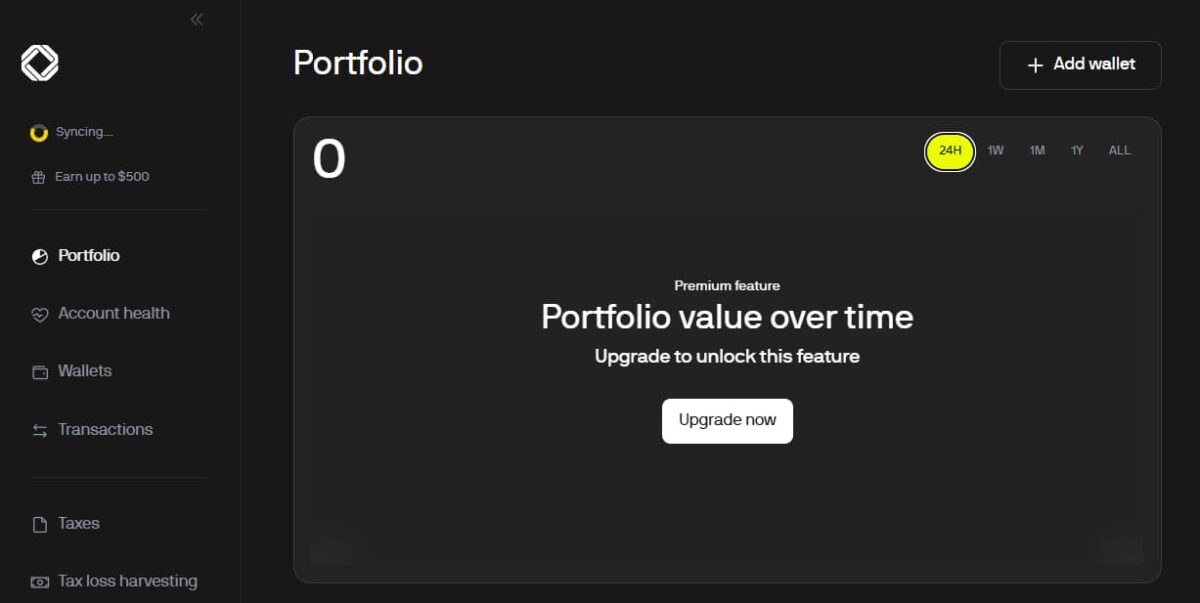
CoinTracker has long been known for merging portfolio management with tax reporting, something both novice investors and professionals appreciate when tax time comes around. Its branding has consistently relied on compliance, and as of 2025, it remains one of the most mentioned names when accountants discuss crypto files.
Famous for portfolio synergy and tax synergy
Unlike most apps where tax is an afterthought, tax logic is built right into portfolio monitoring on CoinTracker. Each transaction gets recorded complete with cost basis adjustments, realized gains, as well as taxable events indicated.
For instance, when an individual sells ETH after staking, the reward automatically categorizes as ordinary income, while the trade itself falls into the capital gains section. It minimizes manual categorization and accelerates filing.
Feature Comparison
- Tax classification: Real-time identification of taxable events → Fewer manual corrections at tax time
- Portfolio view: Balance, allocation, ROI/PnL → Standard tracker functionality
- Export options: TurboTax, TaxAct, CSV, API → Direct pipelines into filing software
- Asset support: Broad across CEX + some DeFi → Adequate for mixed portfolios
This appeals greatly where the reporting requirements are more elaborate, as they are in the United States, Canada, or the UK.
Complexity and subscription model as stumbling blocks
Although tax integration is strong, CoinTracker adds frictions in different areas. Its dashboard may seem crowded to new users, filled with tax-related terminology. Subscription fees also escalate fast as higher-level subscriptions become necessary when transaction volumes grow.
Drawbacks frequently mentioned by users include:
- Sparse DeFi/NFT reporting, so highly complex portfolios require additional trackers.
- Scaled fees when transacting thousands of times.
- Regular reconciliation mistakes needing manual corrections, particularly for rare tokens.
“The tax season was rescued by CoinTracker but on an everyday basis it was more hefty than I required. For casual monitoring purposes it’s too large.” – Retail trader, 2025
CoinTracker excels where the decision-making factor is compliance and tax reporting but falls short as an everyday portfolio tool. That’s why some investors use CoinTracker along with a more intuitive specialized service on a daily basis.
6. Coin Market Manager
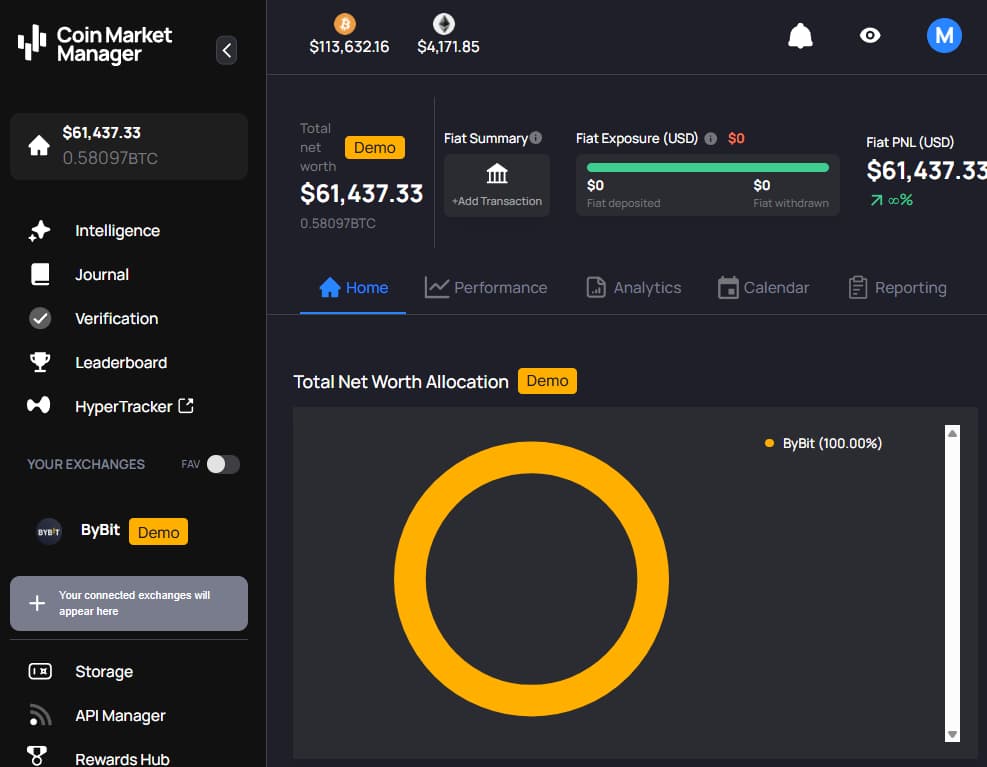
Coin Market Manager, abbreviated as CMM for short, serves active traders primarily. Its strength doesn’t lie in DeFi or NFTs but sets its root in trade analysis, journaling, and backtesting. For users who desire an edge on centralized exchanges but want something more than a simple portfolio dashboard, it provides a professional toolkit.
Trading-focused specialized analytics
CMM excels where users see hundreds or thousands of orders. It generates sophisticated metrics like average win/loss ratio, position sizing trend lines, and performance versus benchmarks by extracting data directly from the exchange through an API.
Snapshot of the analytics CMM produces:
- Average trade life: 42 minutes → Recognizes overtrading tendencies
- Win/loss ratio: 1.8 → Assesses strategic alignment
- Largest drawdown: -12% → Risk perception
- ROI per trading pair: +9% on ETH/USDT, -3% on BTC → Unveils strengths and weaknesses
This diary-like style makes it valuable for semi-professional traders who consider cryptocurrency as their job, not just a pastime.
Weaknesses outside pure trading environments
But the specialization of CMM also restricts its applicability. It lacks intrinsic deep integration for DeFi, NFTs, or tax reporting. Yield farming experimenters or long-term holders will notice gaps, as the platform focuses heavily on execution metrics but falls short on whole-portfolio visibility.
Other disadvantages include:
- No compliance-ready real-time exports.
- Subscription tiers aimed at professionals, not casual users.
- Learning curve for beginners who lack experience with trading journals.
“My Coin Market Manager showed me my bad tendencies – losing money chasers, too much margin on BTC – but it couldn’t monitor my staking or NFT turns.” – Active trader, 2025
In effect, CMM is the sharp tool for traders – excellent at discipline and insights. But as an integrated portfolio manager, it stumbles, particularly compared with broader solutions.
7. TaxBit
TaxBit takes the portfolio management route of being compliance-first so it’s not so much a day-to-day tracker but more of a regulatory and accounting engine. Its target audience consists of enterprises, accountants, and retail users in highly regulated marketplaces who fear the messiness of crypto taxation.
Advanced compliance and accounting solution
TaxBit’s selling proposition is its native-in-tax design. Rather than attaching tax reporting onto the side of an existing tracker, it was created ground-up for the purposes of IRS (and international) filings.
Key features include:
- Instant sorting of taxable events (staking rewards, airdrops, trades).
- Real-time tax liability panels.
- Connection to main exchanges and some wallets.
- Accountant-ready, audit-compliant reports exportable.
Example TaxBit dashboard view:
- Spot transactions: 1,240 → Capital gains/loss = $4,850
- Staking rewards: 312 → Normal income = $2,200
- Airdrops: 15 → Extra income = $640
- NFT sales: 28 → Capital gains = $1,950
This makes TaxBit invaluable for users who don’t care so much about pretty charts but want tax survival.
Too sophisticated for retail investors’ everyday use
The same strength that appeals to accountants spells trouble for daily portfolio monitoring. Retail users frequently complain that:
- The interface seems tailored for tax professionals, not casual traders.
- PnL/ROI metrics are ancillary, defined largely in terms of tax liability.
- Pricing bands go up with transaction volume, discouraging frequent users with thousands of micro-transactions (e.g., farming rewards).
- NFT and DeFi blending exists but is approached mainly through a compliance lens rather than as live dashboards.
“TaxBit kept my tax season seamless, but I’d not use it for my daily check of the balance. It’s not so much a frontend checker but a backend tool.” – Consumer user, 2025
For businesses and accountants, TaxBit eliminates regulatory nightmares. For those seeking an everyday dashboard complete with ROI and allocation simplicity, specialized platforms such as CoinDataFlow remain more balanced and accessible.
What the Comparison Discloses
Having explored specialized platforms in parallel with bots and lean-weight applications, the contrasts between design philosophy as well as practical results become more evident. Each category of tool has an audience it best appeals to, but the virtues of specialized trackers become evident as to why investors eventually turn towards them.
Strengths inherent only in specialized equipment
Specialized services don’t only consolidate balances – they explain them. Their event-level data models tie each ROI/PnL number back to an underlying transaction. That enhances credibility and decision-making when investors encounter tax payments or compliance verification.
Specific benefits are:
- Consistency: outputs validate chain explorers as well as exchange ledgers.
- Coverage: coverage for CEX, DeFi, NFTs, and vesting tokens under one roof.
- Readiness for compliance: normalized exports for accountants.
- Scalability: just as effective for a $1,000 starter wallet as for a $1M fund.
Compared to the others, bots and simple apps never succeed on all four fronts.
Technology Comparison
- Bots → Automated routines, rebalancing | Falls short: transparency, risk of over-trading
- Lightweight applications → Convenience of use, mobility access | Falls short: shallow analytics, few integrations
- Specialized services → Precision, scope, compliance | Falls short: advanced complexity, subscription fee
Chinks bots and basic apps can’t fill
Simple-to-use bots make it easy to execute but often conceal the “why” of the trade. That leaves blanks where investors crave understanding. Easy-to-use onboarding lightweight apps cause superficial analytics to fail as the portfolio gets more diverse. Both approaches miss crucial ground:
- Lack of clarity: not easy to authenticate accuracy of ROI/PnL.
- Low breadth: non-existent NFTs, DeFi, or multi-chain data.
- Blind spots for compliance: export formats for filing not available.
Once these gaps become evident, investors typically shift to specialized platforms because correcting errors manually costs more than subscribing to a professional-grade service.
“I learned the free app wasn’t free when I worked 20 hours sorting out CSVs for tax. It would have taken me weeks as a specialized tool.”
Why balanced specialist platforms suit most investors
The future is for products that blend usability and depth. Specialized software such as CoinDataFlow demonstrates this balance: approachable dashboards on the surface, but detailed analytics as well as compliance exports beneath. It ensures newcomers won’t feel overwhelmed, while experts obtain the rigor they require.
Such flexibility is important as investor life cycles change. A client may begin as someone who has $500 on Coinbase, then stakes tokens on-chain before finally requiring tax-ready exports. Dedicated software that adjusts for each phase minimizes churn and friction.
Ultimately, the comparison demonstrates how specialized isn’t exclusive but scalable, precise, and future-proof. Investors don’t have to sacrifice simplicity – they need platforms which maintain simplicity in tow but provide advanced features when needed.
FAQ
Crypto investors in 2025 tend to pose extremely practical search-type questions when choosing between bots, skeleton apps, and dedicated portfolio offerings. Following are the most frequent questions and brief responses featuring contrasts in how decisions vary.
Are robots trustworthy for portfolio management?
Bots will automate the rebalancing or executing on strategy but should not be mixed up with portfolio trackers. They do not explain but act upon it, so they may change your allocations without providing you with an open-book ROI/PnL report. It greatly depends on the design of the bot as well as the access you provide. Once trading API-keys carrying withdrawal rights are made available, the risk quickly surges. Dedicated trackers most often prefer the safest option using the read-only keys.
Why do investors turn from free applications to professional software?
Free dashboards sufficed for monitoring the small wallet balance but when the portfolio expands beyond lines of chains and exchanges, the blinds occur. Investors switch when they meet:
- Inconsistent ROI/PnL numbers with reality.
- Lack of coverage for NFTs, DeFi, or reward.
- Time lost cleaning the CSVs for taxes.
The “free” device ultimately costs money in the form of errors and human labor. Specialized sites eliminate those costs by being accurate at the beginning.
What specialized services blend well in DeFi and also in CEXs?
Others bias on one side: Zapper shines on the DeFi/NFTs side, whereas Coin Market Manager specializes in CEX trading analytics. CoinDataFlow strikes the middle ground by incorporating both: it interfaces on the exchange side as well as on-chain wallets as well as tax tools, providing investors at-a-glance consistency without the necessity for two different dashboards.
How are compliance platforms different from all-apps?
Compliance software such as TaxBit or Lukka just provide portfolio visualization. They also normalize data, tag events for tax regimes, and provide audit-ready exports. Compare this to generic apps, which just display balances and ballpark ROI. To an individual investor on the street, the compliance platforms might seem intimidating, but for regulated entities or funds, they are invaluable.
What 2025 innovations require specialized services?
Several trends make generic dashboards insufficient:
- On-chain intelligence – services now monitor not only balances but behavior of wallets and liquidity risk.
- Real-time reconciliation – no more tolerated delays for active traders.
- Cross-asset support – NFTs, vesting tokens, and off-chain data such as stocks may now all be monitorably tracked.
- Ready-to-comply exports – goodbye “fix it later” spread sheets for accountants.
- User segmentation – starter dashboards that grow into pro-level analytics.
Those innovations force investors towards the specialized services as the new normal.
Conclusion
Crypto portfolio management in 2025 is the evolution of the industry itself. Initial onesheet remedies – bots and simple apps – addressed simple issues – viewing balances quickly or automating rebalancing. But as the portfolios spread chain-ward, exchange-ward, and asset-ward, the weaknesses in these generic so-called remedies became less bearable. Investors don’t just desire visibility anymore; investors require accuracy, compliance preparedness, and flexibility.
Specialized services filled the void. They made ROCs / PnLs clear, standardized data of disjointed ecosystems, and included tax reporting that withstands audit. They also set the standard for security higher, transitioning from perilous full-permission APIs to secure, read-only connections. In doing so, they became not only trackers but trustworthy systems of record.
For starters, dedicated platforms offerable dashboards easy enough to begin with. For professionals, those same tools open up detailed analytics, multiple-user roles, and exports meeting the requirements of auditors. That scalability reasons why increasing investors select them as their long-term base as an alternative to quick fixes.
“A free app was sufficient for my first $500. Once I had $50,000 distributed between DeFi and exchanges, I required an application that won’t topple due to the gravity of its own cheat codes.” – Part-time investor, 2025
It contrasts between bots, basic apps, and purpose-built trackers reveals an unmistakable trend: lean solutions continue as useful stepping stones but purpose-built tools hold the only way ahead for those who cherish accuracy, regulation, and development. Products as CoinDataFlow symbolize the new standard by trading off between usability as well as professional-level depth.
Upon increasing regulation, evolving market trends, and further diversified portfolios, the need for highly specialized platforms will continue to expand. Those features that had been made to feel “extra” in the past – tax exports, DeFi integrations, on-chain analysis – now become minimum requirements. Bots and bare-bones apps will continue for edge cases, but the mass of investors will increasingly view specialized trackers as optional but vital infrastructure.